S/4 Finance | The New COPA or Better Integration with FI
#1 – What Is It?
When implementing the CO-PA module, it was always challenging to make the right choice between costing-based CO-PA and account-based CO-PA.
Costing-based CO-PA made it easier to create a cost of sales income statement, with more detailed data than general ledger accounts. The source of information was not based solely on financial accounting, but also on logistics and management control modules, thus enabling more relevant detail. However, reconciliation with financial accounting was more difficult.
Account-based CO-PA, on the other hand, allowed immediate reconciliation with financial accounting, but required analysis by account, which limited analysis of cost origins or detail on manufacturing variances.
The income statement lines with account-based CO-PA are accounting natures (primary or secondary). Whereas the lines of an income statement with costing-based CO-PA are value fields (limited to 200) that are populated by accounting natures (primary or secondary) but also by SD pricing conditions, or by cost categories defined in CO-PC.

#2 – Origins of the Income Statement by CO-PA Type
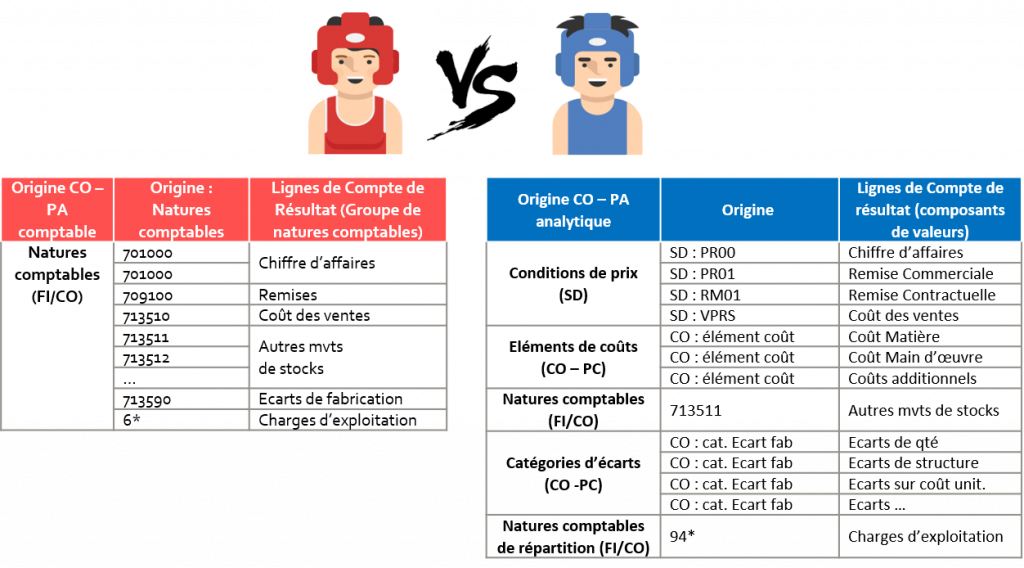
Even though costing-based CO-PA made reconciliation with financial accounting more difficult, it was often appreciated for its level of margin detail.
Another “debatable” point of costing-based CO-PA was that the cost of sales was only picked up in CO-PA when revenue was recognized, which caused issues when invoicing came the following month.
#3 – Fortunately, all these troubles have been resolved with S4 Finance! Hang on tight!
The situation has changed; we are now facing better integration between financial accounting and material management, thus enabling a direct link between CO-PC and FI.
It is now possible to break down the cost of sales by cost origin at the time of goods issue posting. Manufacturing variances, which were previously posted only in aggregate, are now posted in detail by manufacturing variance categories. For this, some configuration settings are necessary, some general ledger accounts need to be created, but the result is conclusive.
MeltOne Advisory conducted the exercise in an industrial context:
How? Through the most compelling way possible, namely a demo on our S/4 Hana system!
To whet your appetite, a simplified presentation of the major purchasing, production and sales macro-processes, coupled with the reporting needs generally found in industry (experience speaking)!
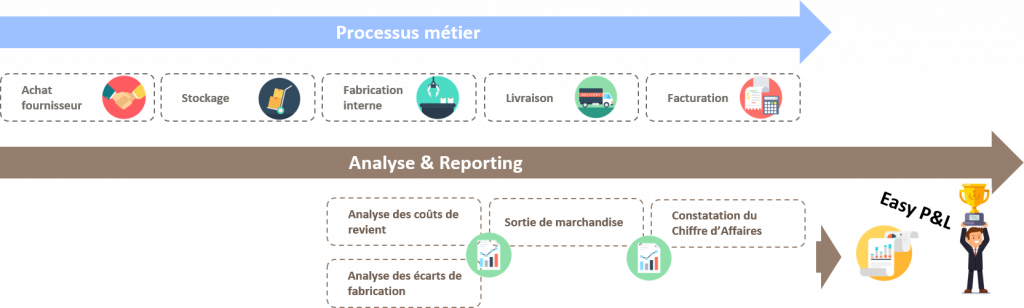
As experts on the topic, we focused on two major changes brought by S4 Finance
- cost of sales detailed by cost origin,
- detail of variance categories.
OK? Let’s go!
A – Cost of sales detailed by cost origin:
The goods issue posting, which was previously done only to a stock change account, is now more complex, thus providing the necessary level of detail. The material document resulting from an outbound delivery contains more accounting documents than in ECC (2 accounting documents, 2 controlling documents, and 1 Material Ledger document).
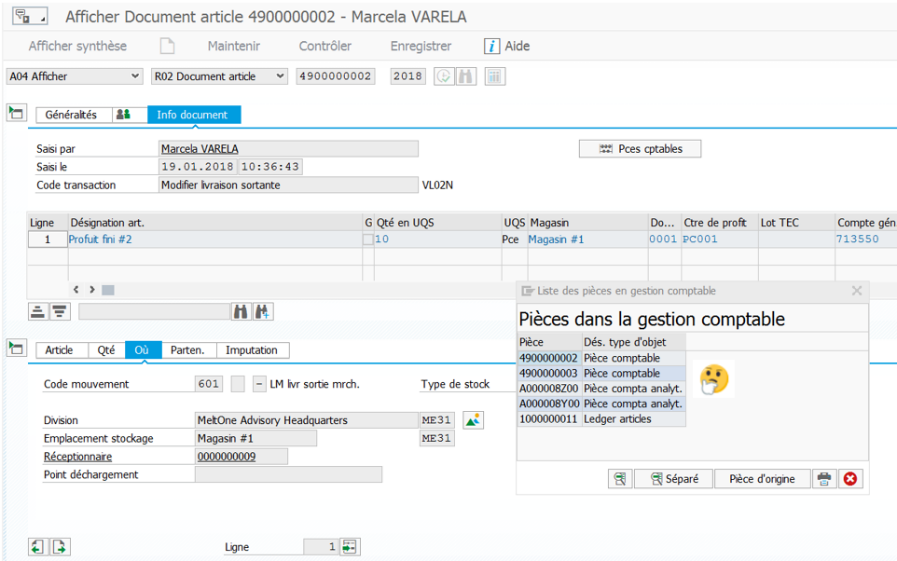
The first accounting document corresponds to the standard goods issue posting (Stock Account 35* / Stock Change Account 713*).
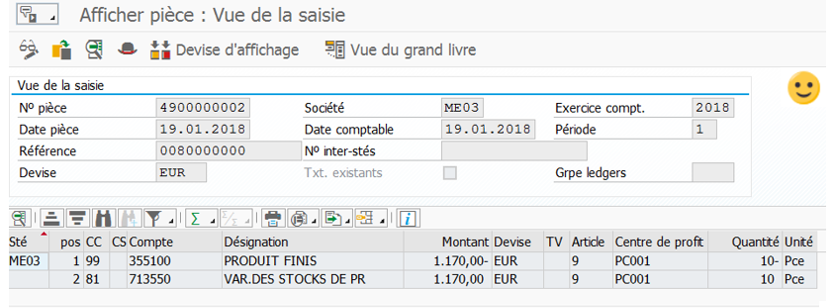
The second accounting document contains an accounting schema in which the stock change is reversed and then reposted in detail by cost origin.
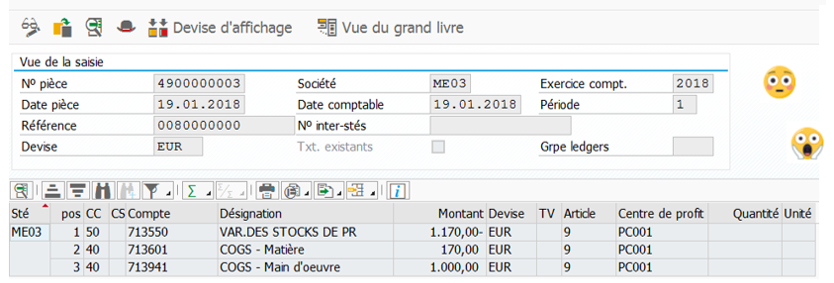
It’s magical and instantaneous: the cost of sales is now detailed by cost origin in accounting, enabling a relevant gross margin analysis without jeopardizing reconciliation with accounting! Controllers can pop the champagne!
B – Manufacturing Variance Categories:
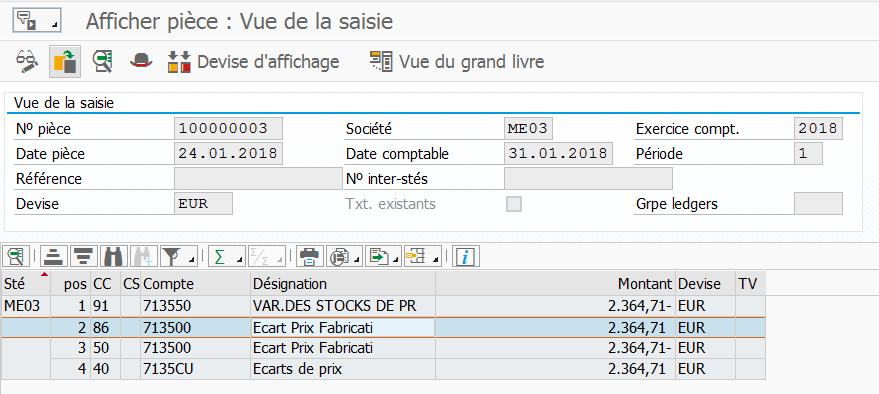
The accounting posting of manufacturing variances calculated during order settlement in CO-PC resulted in an accounting document with the total variance (and the detail by cost category was only visible in costing-based CO-PA).
With S4 Finance, the detail of variance categories is posted, thus enabling better readability and analysis. The system is identical to that of cost of sales; the price variance account (Key PRD) is debited and credited, giving way to the detail of defined variance categories.
#4 – In Conclusion?
S4 Finance therefore has all the advantages of both types of COPA, account-based AND costing-based! Immediate reconciliation that also includes cost details! And like any good conclusion, we open the topic by asking what comes next—namely, reporting statements.
To be continued in the next episode…
Want to learn more about S/4?
Our experts will be able to answer all your questions—feel free to contact us!