SAPPHIRE Recap: An American-Style Show!
From May 7 to 9, 2019, the annual SAPPHIRE NOW and ASUG (Americas SAP Users Group) conference was held in Orlando. Driven by curiosity and a desire to learn more about the latest innovations from Waldorf, the MeltOne teams naturally went on-site to find out more. Presentation and analysis…
SAPPHIRE What’s That?SAP S/4 Hana Cloud: What Is It?
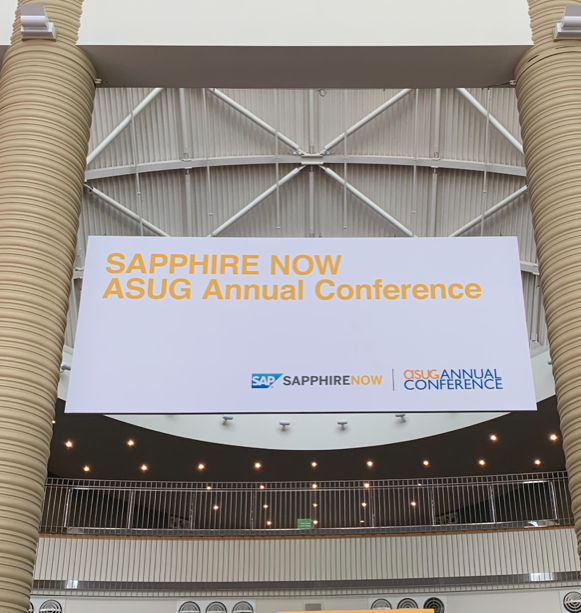
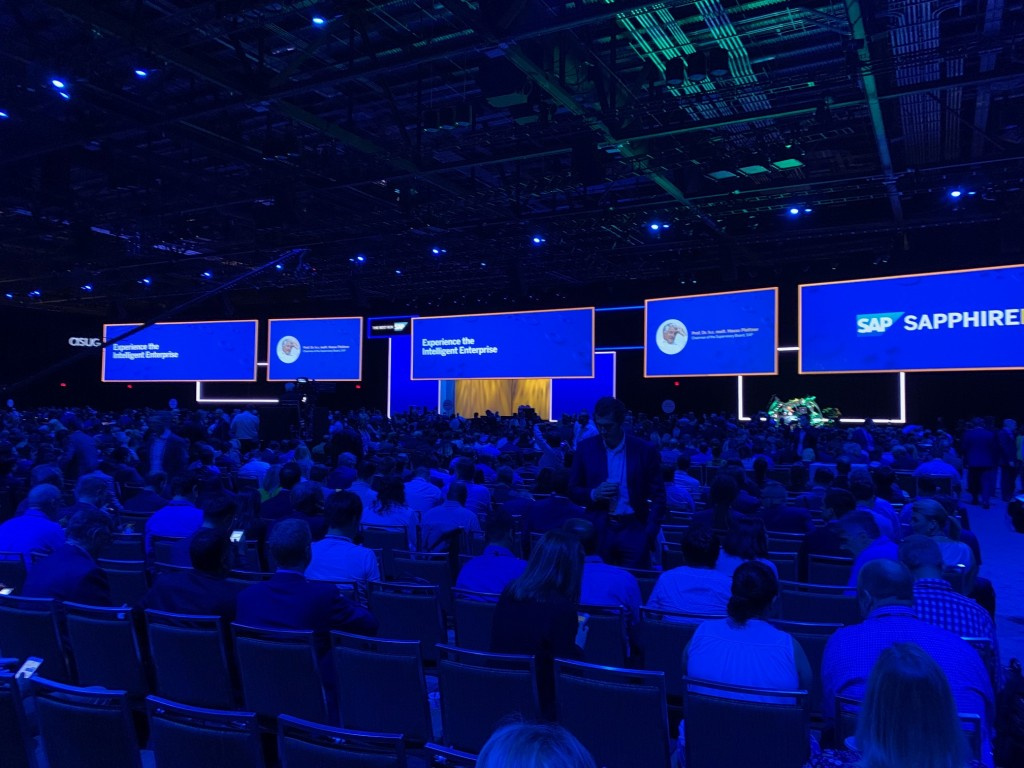
For those who may not already know, SAPPHIRE is SAP’s grand event. It is the largest SAP event that brings together all the thought leaders from headquarters as well as customers and prospects, not to mention integrators and partners of the company with the blue and white logo. Last year the event gathered some 22,000 participants in a space of one million m2. This year the participation figures should be even higher and the number of workshops offered over the 3 days exceeded the symbolic threshold of 1,000!
What was on the agenda for these 3 days? An immersion in tomorrow’s technologies (Cloud, Blockchain, Machine Learning, Predictive…) and presentations of SAP’s roadmap for the coming years. To this end, MeltOne noted SAP’s clear intention to migrate its current customer base toward cloud architectures. Evidence of this is the emphasis on the various partnerships that SAP has established with Microsoft (Azure), Google (Google Cloud Platform) and Amazon (AWS), as well as the Embrace project that SAP heavily promoted during the Florida event. The underlying idea is that traditional on-premise customer installations will disappear in the coming years in favor of the cloud. This is why SAP offers different options and tools to support any type of migration using either a “Brownfield” or “Greenfield” approach.
The event was also marked by renowned personalities who came to pitch during the various keynotes scattered throughout the agenda. Like Bill McDermott, CEO of SAP, and his teams, Tim Cook (CEO Apple), Ryan Smith (CEO Qualtrics), Jay Crotts (CIO Shell), Karlie Kloss (Entrepreneur), Jasmine Crowe (CEO Goodr), Sandra Bullock (Actress), Bear Grylls (Man Vs Wild) and many others…. So many leaders who came to share their vision of today’s and tomorrow’s world by highlighting the increasingly strategic role that new technologies play in the development of the global economy.
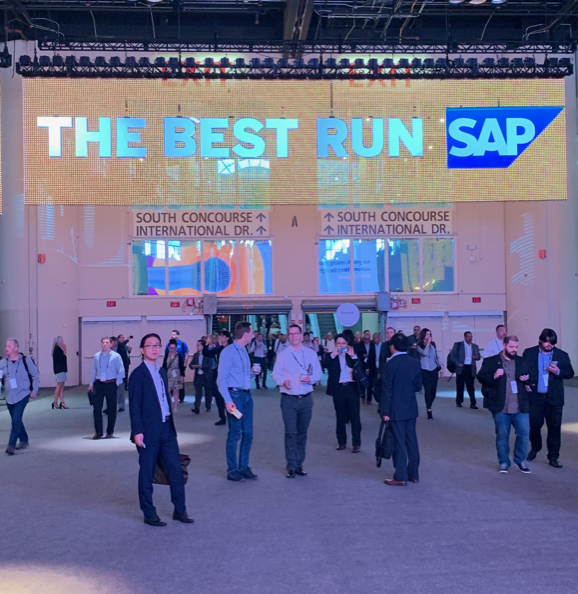
| The SAP Motto
O’s and X’s!
SAP’s flagship theme this year was Customer Experience. With the acquisition of Qualtrics at the end of last year for $8 billion, it was quite natural for the German firm to highlight this new segment that opens up enormous market shares in Customer-Centric and allows it to complete its C/4HANA offering.
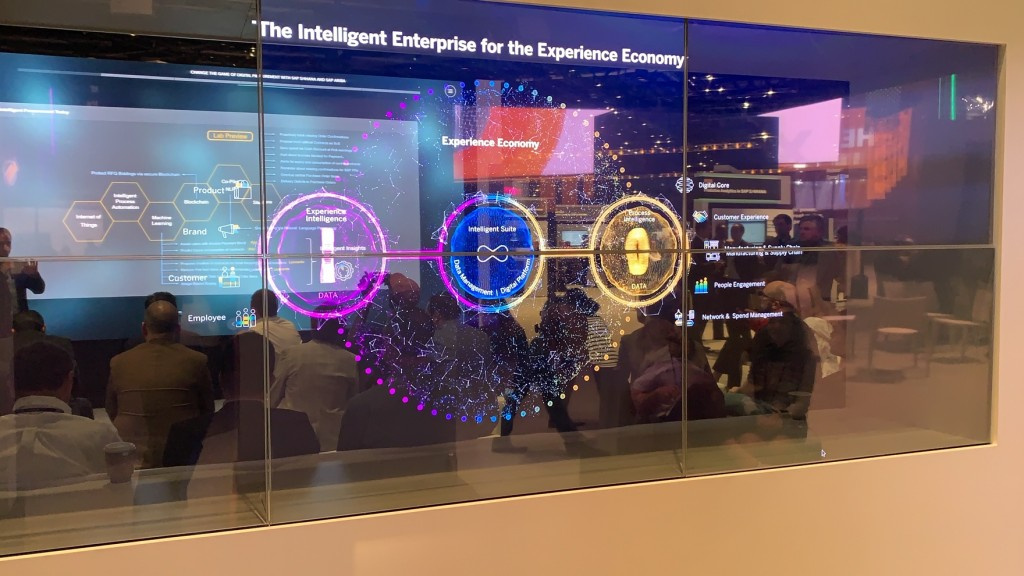
At the opening of the event, SAP announced the upcoming release of 10 new offerings driven by X-data (customer experience data, such as community reviews left on the internet) combined with O-data (so-called ‘classic’ operational data collected by B2C-B2B companies) to measure and improve the 4 pillars of all commercial activities: customers, employees, product(s) and brand.
We could quote Ryan Smith, co-founder and CEO of Qualtrics, who summarizes the challenge in these terms: “We live in the experience economy where organizations are either intentionally racing to the top or unknowingly racing to the bottom. The difference between the companies that will win is they understand how X-data and O-data work together to tell the story of what is happening in an organisation, why it’s happening and how to act in real time to deliver breakthrough business results.”
Ultimately the challenge is to create value around customer experience, by refocusing the company on listening to and centralizing experiences within a single platform. The added value then lies in each company’s ability to connect its experiences to facts in order to understand why and how an event can have a positive or negative effect on an organization.
In summary, a new digital discipline called “Experience Management” or XM that we should be hearing about soon.
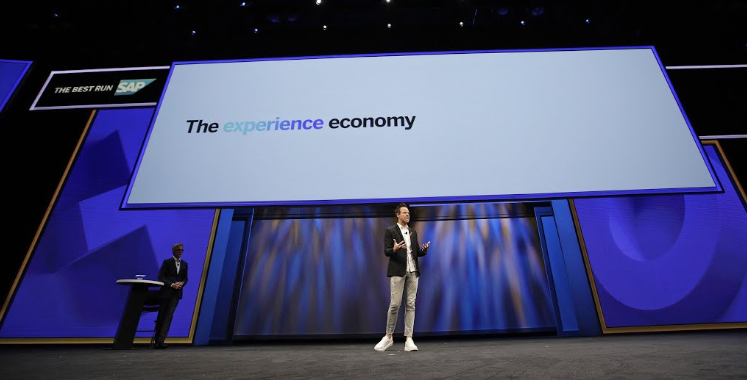
| Experience, the Grand Master of the Show
A New Product – SAP Data Warehouse Cloud
During Hasso Plattner’s always interesting keynote, SAP announced the launch of a new product, SAP Data Warehouse Cloud to enable business users to access data more quickly and simply. As its name suggests, this solution is based on a Hana database but in the Cloud.
The objective is no longer to replicate data in a data warehouse but to connect to the data source in order to always have the right information at the right time in the right place to make the right decisions.
The other motto of this new solution is to be able to give control back to the business and allow them to access data themselves, to share information within business teams.
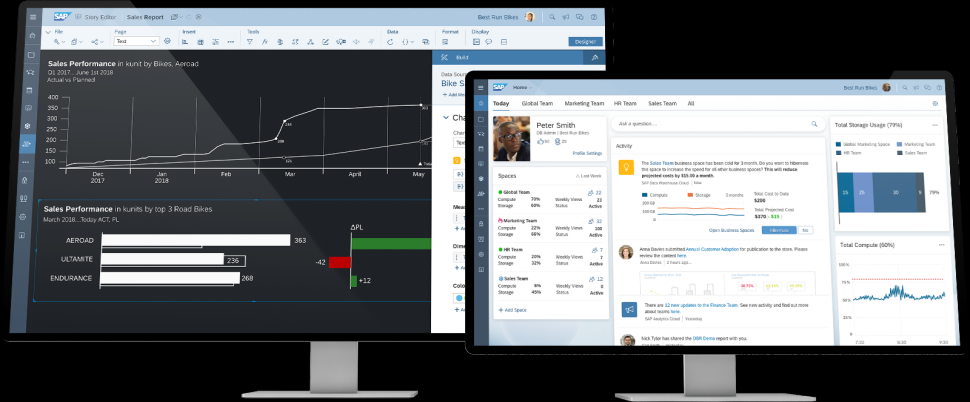
As in all SaaS models, SAP announces savings and flexibility in resource usage by allowing machine capacity to be reallocated up or down and by putting spaces into hibernation (the concept of space is similar to business departments).
For now we are curious to see this new product and watch it evolve over time, more to come in the next edition.
What’s New in ERP and EPM?
While customer experience was the star of the forum, ERP and EPM also had their share of new features and other demonstrations. However, no major announcements on these solutions except for improvements that move toward simplifying certain processes.
Let’s start with ERP with an overview of the new features related to 1809, the latest version of the S/4HANA ERP.
One of the first advances concerns predictive accounting that SAP has implemented on the SD module. This allows anticipating the amount of revenue that a company can expect based on sales orders placed even though they have not been delivered and/or invoiced.
A sales order does not post any accounting document until a stock movement or invoice is posted. With this functionality and the activation of the extension ledger, to be activated on the general ledger, SAP will now post entries at the time the sales order is recorded.
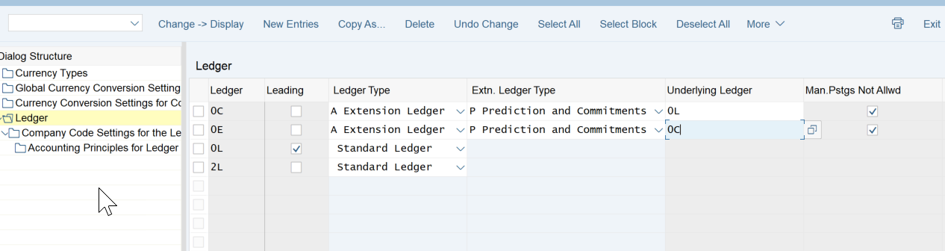
| The New Extension Ledger
These predictive entries being recorded in the universal table, ACDOCA, they are easily viewable and usable via Fiori applications that allow reporting on actual entries vs. the amount of predictive entries.
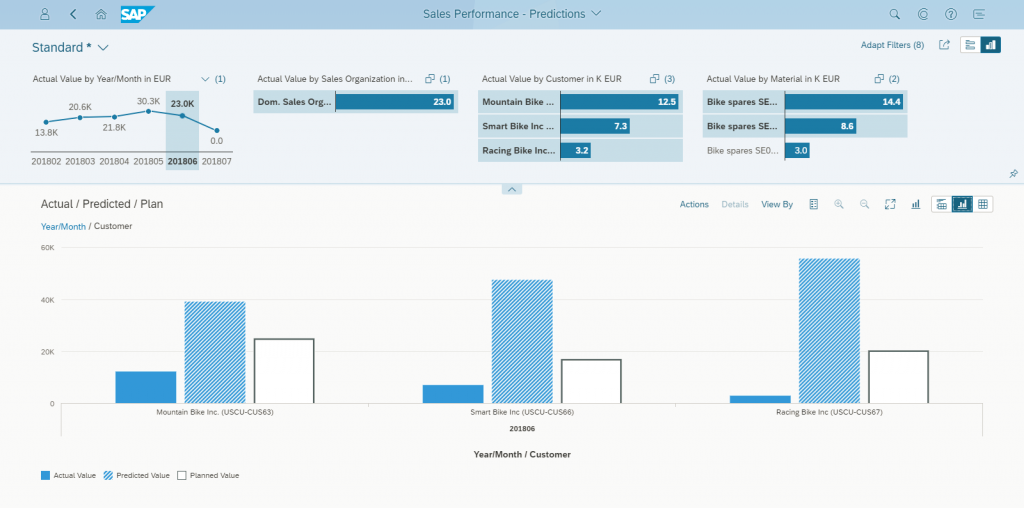
| Predictive, a Growing Challenge
Note that the same mechanism applies to purchase orders with the ability to predict the level of commitments based on a history of orders by cost center, WBS element or internal order.
Speaking of commitments, SAP has also highlighted the FIORI application that now provides a clear and analytical view of an entity’s OPEX by budget, period, fiscal year… enough to delight management controllers as classic CO reports are not the most user-friendly.
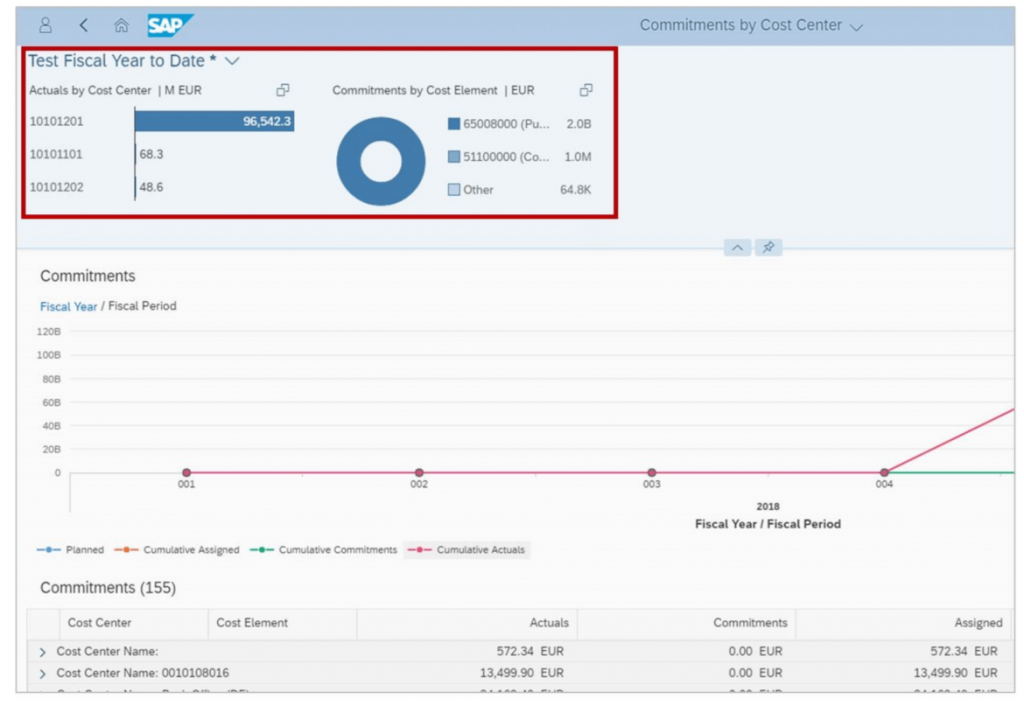
| Predictive and Intelligent Reporting
As Finance specialists, we participated in many presentations on the subject during SAPPHIRE and one that particularly struck us concerns the new allocation logic included in the upcoming S/4Hana 1909 release.
SAP now introduces the principle of Universal Allocation. This new allocation engine provides a complete integration cockpit via a single transaction that eliminates the performance problems often recurring when a large number of segments are contained in an allocation cycle.
Goodbye therefore to transactions KSU5, KSV5, KSUB… everything is centralized here with a view to simplification. The cockpit allows FI and CO allocations (CC, IO, WBS), managing in parallel the launch of several actual and/or budget cycles. And the icing on the cake, the cockpit offers a simplified visual redesign and a more powerful simulation tool.
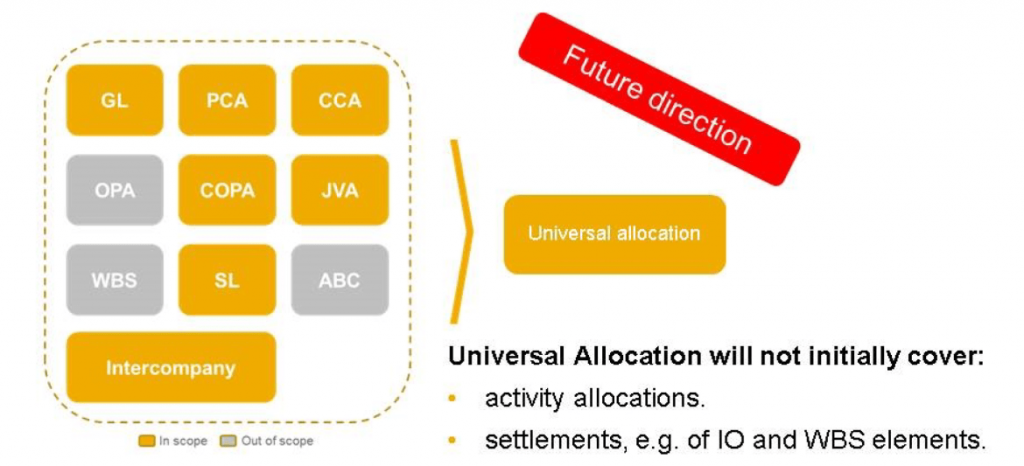
| Universal Allocations, SAP Target Presentation
Change is also expected on the standard hierarchy management side with the implementation of a FIORI application that allows centralizing and maintaining all hierarchies included in SAP via a central point.
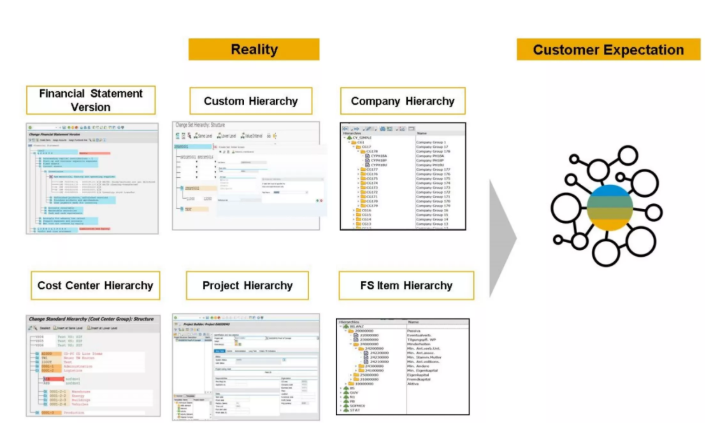
| Simplified and Unified Hierarchy Management
Let’s also talk about Machine Learning via Leonardo, SAP’s spearhead, which sees in this technology the future of the intelligent ERP.
Machine learning is SAP’s automatic learning of a set of transactional operations and/or exploitation of static data aimed at either automating low-value-added tasks by suggesting actions to the user (while based on their habits) or anticipating future trends (in this case we will speak of predictive analysis).
An example that makes sense for MeltOne, the Cash Management module which allows via the use of SCP (SAP Cloud Platform, which notably contains APIs, blockchain management and Leonardo) to learn and automate the often time-consuming clearing of 511* accounts. Eventually, this often daily activity will certainly be faster in execution, the operator will then be dedicated to a controller role.
Second example, the clearing of provision accounts 408*, the famous EM/EF (goods receipt, invoice receipt). We see it on our projects at MeltOne, these accounts are often subject to problems for various reasons (incomplete receipt, different amounts between order and invoice received…). Still via a FIORI application, it is now possible to easily analyze the reasons for discrepancies, the system even going so far as to suggest to the user how to resolve the discrepancy in order to close the transaction!
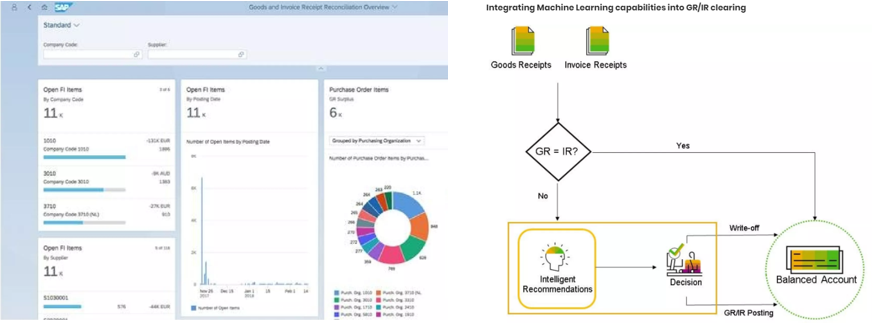
| Machine Learning Applied to EM/EF Accounts, FIORI View
Furthermore SAP promises that by the end of the year, with the release of version 1909 of its S/4HANA, other new functionalities will be present in its suite, namely the addition of scenarios for the universal allocation engine, machine learning for provision management, a more complete closing cockpit (SAC integration), predictive entries for overhead management…
Regarding EPM and Dataviz, SAP Analytics Cloud (SAC) is the cloud solution of tomorrow highlighted by SAP. Presented in detail during the event, this solution is the convergence point of several tools: BI, Predictive, Planning and Consolidation (in addition to/replacement of BPC).
Following its “all-Cloud” line, SAP has clarified its strategy on its Cloud Analytics solution and its native integration with SAP applications without omitting its integration with Business Object, still very widely deployed today in the EPM landscape.
To make the transition more obvious, SAP offers the possibility of integrating SAC into BO to take advantage of the possibilities offered by the Cloud, particularly on the predictive analysis part which constitutes the main innovation in this segment.
SAC therefore allows real-time data analysis while eliminating volume constraints and also offers advanced collaboration functions. The offering includes a very large number of standard reports and relies on machine learning to propose “insights” (alerts, indicators with non-standard values, …) to users on its own, based on the analysis of all the data at its disposal.
The underlying idea for SAP in fine is to make querying and dashboard creation more intuitive and more user-friendly in a context where user experience is now a competitive differentiator.
Finally, SAP’s stated intention to natively integrate SAC with its entire offering whether on S/4HANA ERP through Concur, SuccessFactors, Ariba, BO, C/4HANA…but also to easily integrate with other databases such as Azure, AWS, Google Analytics via connectors provided by the German publisher.
SAP is therefore closing its gap in the domain and allows native integration with SCP, S/4H and eliminates all interface issues while advocating real-time and a user-friendly application (with modification and saving-on-the-fly, powerful simulation engine, native integration of data import/export from/to the ERP…). A tool to watch as the functionalities, ergonomics and robustness of the tool seem to us to be going in the right direction and appears to be the replacement for traditional Business Object (maintained by SAP until 2024).
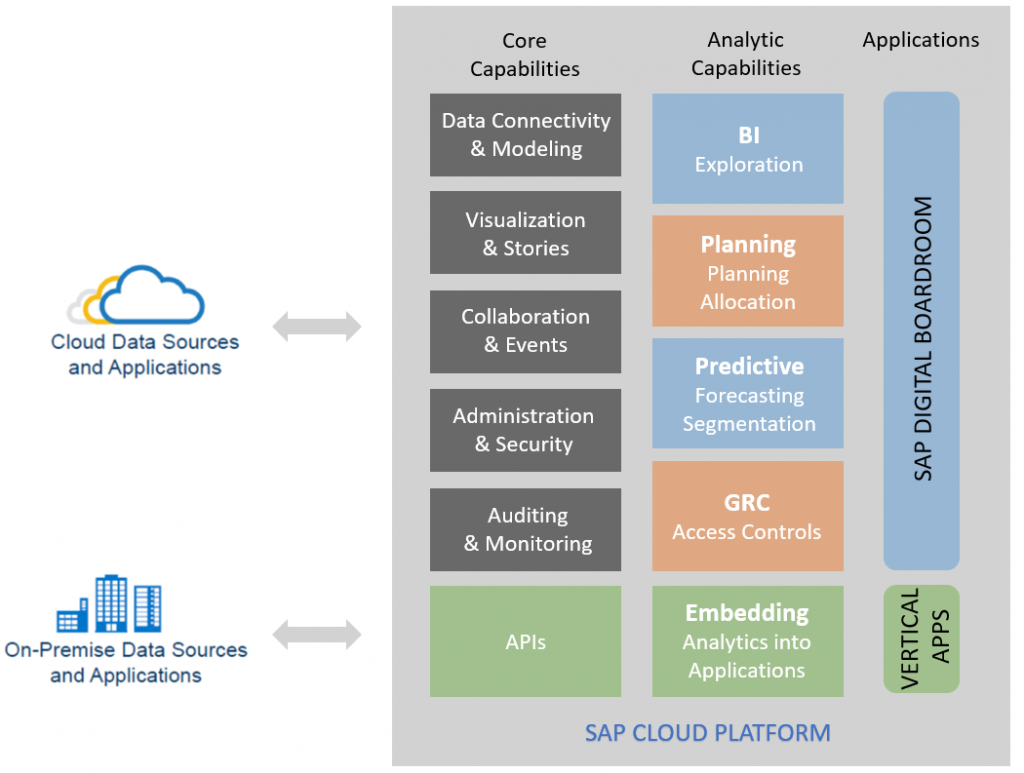
| SAC Architecture and Functionalities Covered by S/4HANA
In conclusion, this event was an opportunity for SAP to continue its momentum, namely to reconnect with its customer base by focusing on innovation enabled by technical progress as well as on the rationalization and native integration of its solutions (SAC, SCP, S4H, C/4, Ariba,.). An increasingly complete and integrated offering.
Thank you to SAPPHIRE and the entire French delegation for welcoming us and see you next year for a new event that we hope will be rich in announcements!
Find all MeltOne offerings on our website: https://staging.meltone.com
- ERP: SAP S/4 HANA, On premise & Public Cloud
- EPM: SAP Analytics Cloud SAP FC, SAP BPC, Anaplan, Tagetik
- Data Visualization: SAP Analytics Cloud, Tableau, Power BI
- Predictive: SAP Predictive Analytics
-
Project Management: Scoping Mission, Consulting and Project Management, AMOA Support Mission
Are You Ready to Move to S/4 Hana Cloud?
The transition to S/4 Hana is now on everyone’s mind and you have questions about the S/4 Hana Public Cloud solution. MeltOne Advisory through its experts is able to support you from scoping to implementation of this new solution. Do not hesitate to contact us at jsaccona@meltone.com
Let’s discuss your challenges and our solutions
Let’s talk about your project and discover how MeltOne can turn your challenges into concrete, high-performing solutions.