
The 4 AI innovations finance departments must know for 2026
Artificial intelligence (AI) has undergone a meteoric evolution in just a few years, moving from an emerging technology to an essential lever for businesses. Today, it redefines working methods and sector strategies, thus opening the way to innovations once deemed impossible. Tomorrow, what still seems out of reach will become reality.
However, this technological revolution raises a major paradox: despite growing confidence in AI, few companies dare to take the plunge. According to a study conducted by MeltOne in March 2026 among Finance and Data decision-makers, 67% of respondents claim to have confidence in AI tools, but still have very limited or even no use of them. This delay could be costly in an environment where the rapid adoption of innovation is synonymous with competitiveness.
In this article, discover the latest major advancements in AI that you must integrate to transform your practices and exploit the full potential of this technology. From concrete tools to integration strategies, we guide you to stay at the forefront of innovation.
1- Autonomous AI agents
An autonomous AI agent is much more than a simple assistant: it is a system capable of executing complex missions without human intervention, by defining the necessary steps itself. For example, a request such as “Generate a summary of my income statement for the closing” triggers a series of automated actions: querying databases, collecting and analyzing information, and then producing a final deliverable.
Unlike traditional coding tools, these agents do not follow a predefined pattern. Their strength lies in their ability to adapt their reasoning in real time, thanks to Large Language Models (LLMs). This flexibility considerably expands possible use cases, but it also requires a strict framework to avoid imprecise or erroneous results.
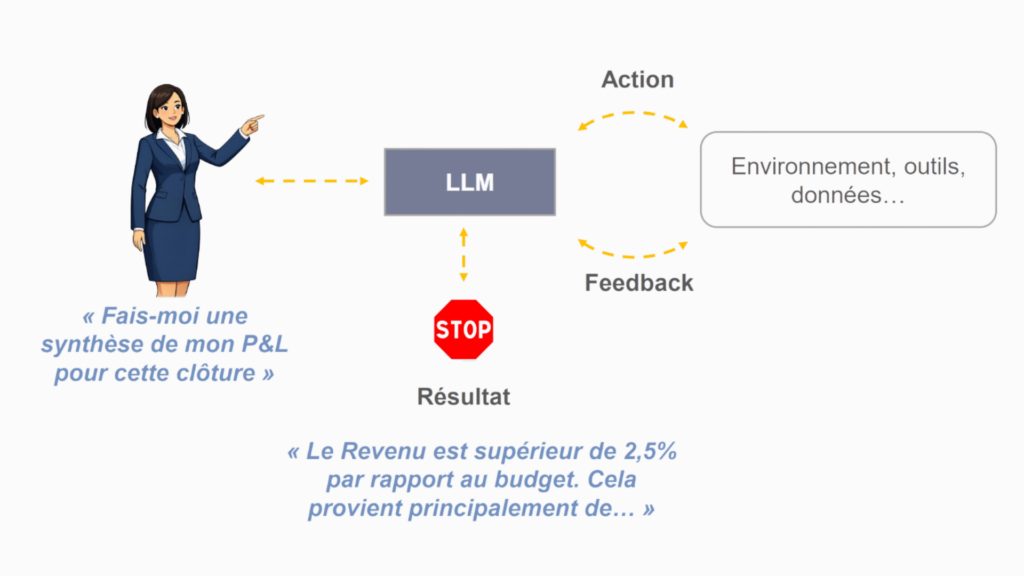
Why is this innovation a game-changer?
- Autonomy: No need to guide the agent at every step.
- Scalability: Adaptation to varied and unforeseen demands.
- Natural Language: Requests and results are made in more accessible natural language.
Caution: rigorous control is essential to guarantee reliability.
How can the autonomous AI agent be applied concretely?
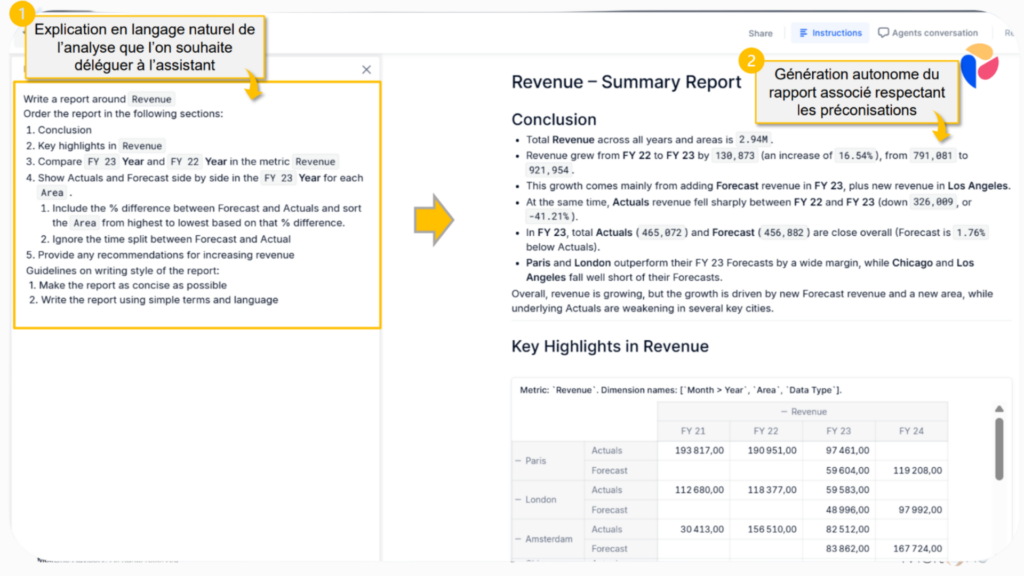
EPM: Enterprise Performance Management (e.g., Pigment)
In a financial management tool, an AI agent automatically generates P&L analyses (comparisons, variances, conclusions) from a simple user prompt. There is no longer a need to manually manipulate data or find the right tables: the agent provides a clear and actionable summary based on a prompt explaining the analysis to be produced.
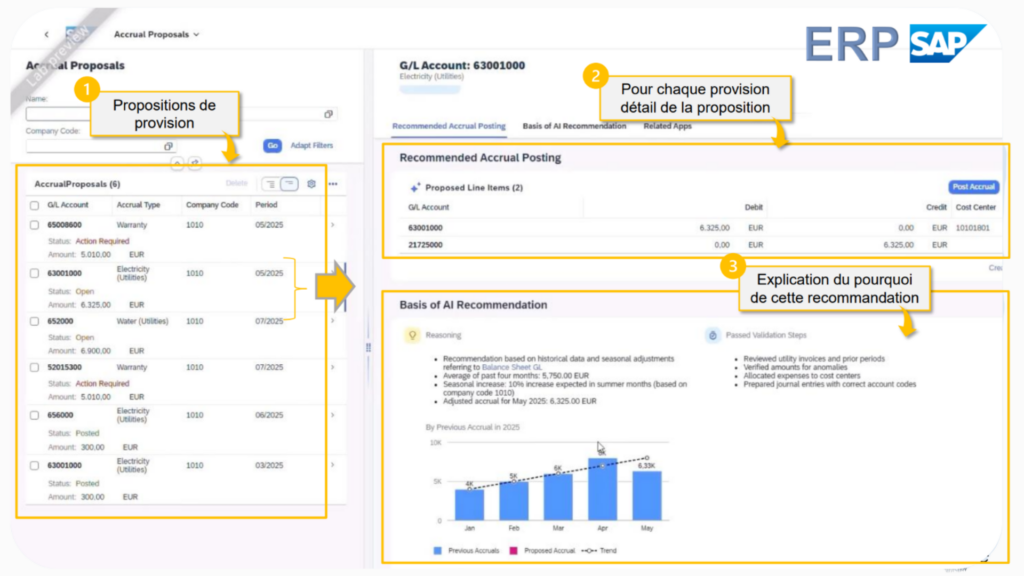
ERP: Enterprise Resource Planning (e.g., SAP)
Integrated into an ERP, the agent analyzes accounting history and proposes a list of provisions to be made, detailing the accounts concerned and its reasoning. Eventually, these agents could execute operations autonomously, subject to human validation.
2 – MCP
The MCP (Model Context Protocol) is a technical standard that allows applications to communicate directly with each other via their respective LLMs. Until now, making an ERP, a financial planning tool, and a database interact required heavy and costly IT developments. Thanks to the MCP, any compatible application can be queried by an external LLM (ChatGPT, Claude, or LLMs integrated into financial solutions like ERPs, EPMs, or data platforms).
The result? A single chat is enough to query the entire financial application landscape, without switching from one tool to another.
Concrete example:
A CFO queries their AI agent about the largest cost variation compared to the forecast. The agent identifies that this question pertains to the EPM, which responds: “Marketing exceeded its forecast by 23%.”
The director then asks for the largest Marketing invoice of the month. The agent directs the request to the Data platform, which provides the details of the invoice in question.
Finally, to find out who approved this invoice, the agent queries the ERP.
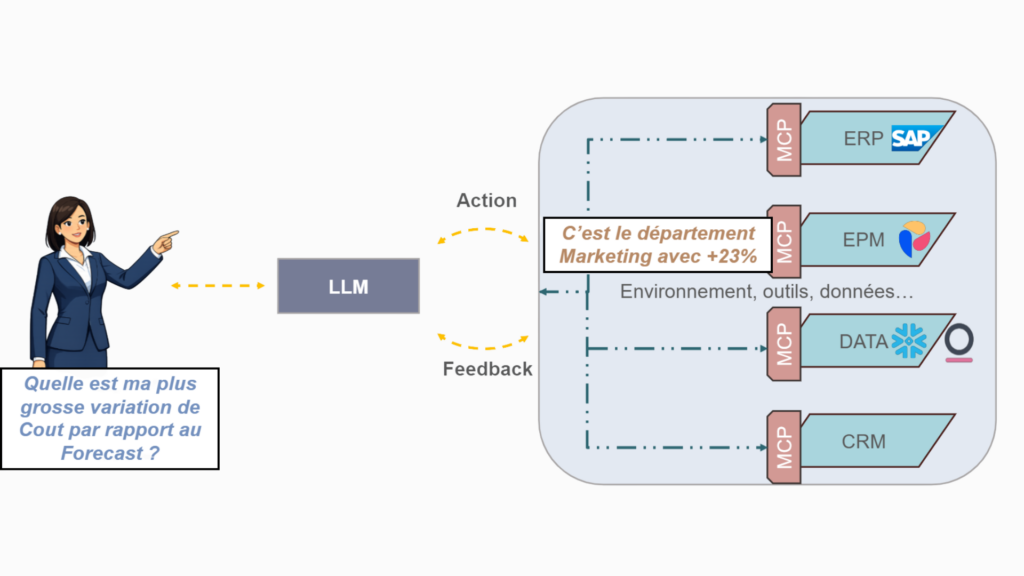
All this in a single conversation, without changing tools
- Time saving
- Flexibility
- Autonomy
Caution : even if connections are simplified via the MCP, work on data quality and master data unification is necessary to exploit the full potential.
3- The conversational agent
The conversational agent allows you to query your data in natural language, as you would address a colleague. No more back-and-forth between dashboards, manual exports, or waiting for developments: the user asks their question and receives a visual and interactive response, tailored to their needs.
Key benefits:
- Centralization: Reduces the need for multiple dashboards.
- Efficiency: Generates narrative summaries ready to be shared, without preparation effort.
- Simplicity: Immediate access to insights, with no technical skills required. You engage in a truly interactive conversation.
In platforms like Snowflake, AI agents offer even more advanced capabilities, although their implementation is more delicate. They explore complex databases, understand their structure, and integrate business vocabularies as well as specific management rules for the company and the Finance department.
Their strength? Responding in business language and automatically generating the necessary SQL code, transparently.
Example with Snowflake Intelligence:
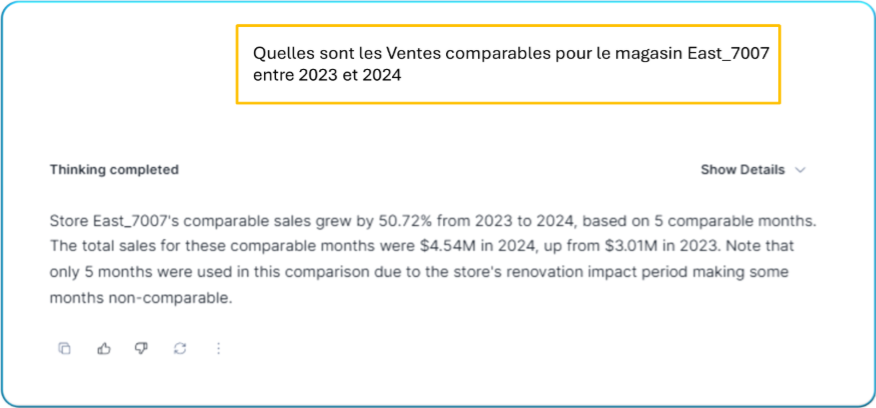
After defining the Like for Like concept and providing the list of store unavailabilities, the agent calculates comparable sales without any additional technical intervention.
4- New reporting tools
Resolving the fragmentation of the reporting chain
Today, Data teams design technical models and dashboards based on business needs. Yet there is always that extra step in Excel (and particularly in Management Control) which aims to meet pressing deadlines, special cases, or very specific formatting. Often, these construction steps are also spread across several teams.
Result: Several visions of figures and their calculation rules coexist, and their maintenance and governance become heavy over time. Finance reporting formats, demanding in analysis and formalism, rarely find a satisfactory response outside of Excel.
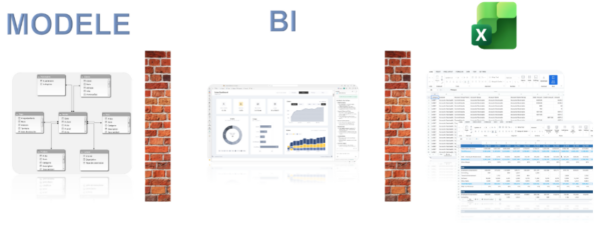
The solution provided by new AI reporting tools: unifying the Finance data chain into a single solution
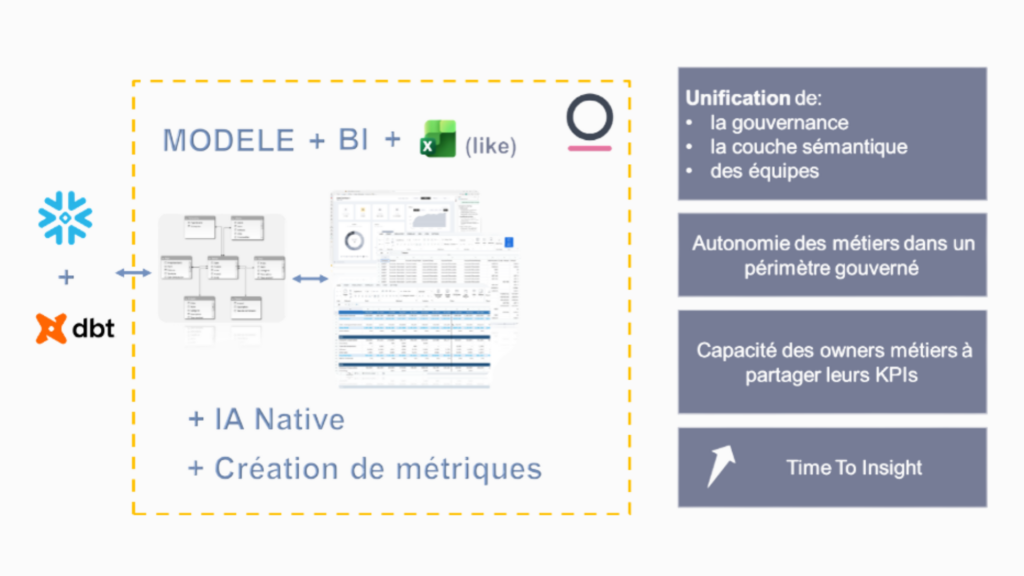
New AI reporting tools allow Finance departments to interact directly with their data via conversational interfaces or familiar environments (Excel-like), while guaranteeing consistency and data governance.
These solutions natively integrate visual analysis capabilities, the flexibility of Excel formulas, and artificial intelligence, all on a unified platform. All teams then work on the same platform.
A response to strong demand from Finance professionals
Our recent survey reveals that nearly 30% of Finance decision-makers consider direct interaction with data (via chat or reporting) as one of the most promising AI use cases. This expectation is explained by the historical complexity of processes: crossing several sources, contextualizing figures, and producing formalized analyses requires considerable effort. AI tools respond precisely to this need by simplifying access to insights.
A unified, governed, and intelligent platform
Solutions like Omni thus combine:
- The functionalities of a visualization tool (Power BI, Tableau),
- The flexibility and formulas of an Excel spreadsheet,
- AI capabilities (model creation, choice of visualizations, natural language querying).
On a unified and governed database, users create personalized indicators (in an Excel formalism if they wish), share them in real time, and work in a familiar environment, without leaving the platform or compromising data consistency.
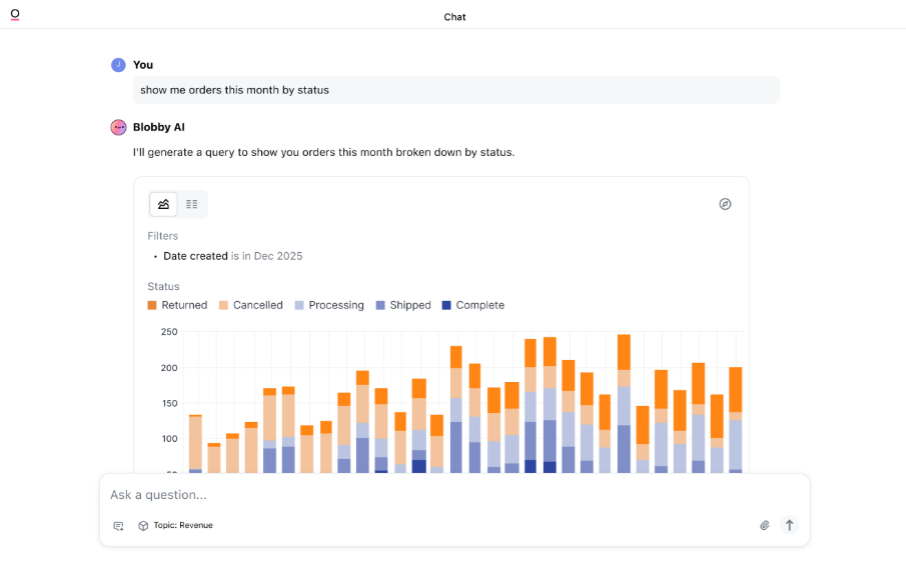
Artificial intelligence accelerates the creation of models and reports, suggests appropriate visualizations, and allows for data querying in natural language. The setup time for indicators is reduced, while ensuring their consistency and alignment.
Conclusion
It is important to have this vision of what is coming and can help your Finance teams. This notably allows for better exchange with your IT and data teams on the evolution of your solutions. There is no priority in implementing these innovations; it depends heavily on your existing setup and your challenges. This is also the benefit of relying on existing AI modules from your vendors (they are directly available and operational when possible).
We are, of course, at your disposal to audit your existing setup and define together an actionable roadmap adapted to your challenges and constraints.