What’s new in ESG?
I. ESG Context: Regulation and Focus on Taxonomy
In 2021, 90% of companies listed in the S&P 500 index published a sustainability report, compared to 75% in 2014. This upward trend is part of a unique health and energy crisis context where society now expects companies to commit to consuming and producing better, while ensuring working conditions adapted to employee well-being. Consequently, companies must integrate ESG into the heart of their strategic plan and communication, at the risk of damaging their reputation with various stakeholders.
In parallel, the regulatory aspect is accelerating. At both European (SFRD, CSRD, Taxonomy) and global (GRI, SASB, TCFD) levels, new standards are emerging. They are becoming clearer as they are implemented, leaving very little room for various actors to comply.
As an example, and among the most ambitious projects, the European Taxonomy aims to reference, then evaluate the sustainability of 70 economic activities responsible for 93% of greenhouse gas (GHG) emissions. This framework will define technical screening criteria to determine whether these activities can be considered sustainable. Thus, in 2022, companies will have to publish the “green” share relative to revenue, CAPEX, and OPEX.
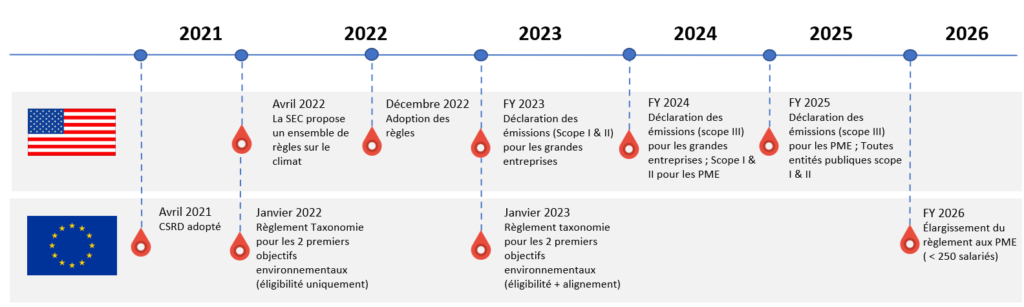
To meet these ambitious regulatory challenges, companies will need to organize themselves at all levels of the business. From procurement to legal, including human resources, all departments will then have to consider the tools and resources they have to produce the information required by these new standards.
II. What steps should companies take?
During the last CCH Tagetik In Touch, held at the end of September 2022 in Lucca, it emerged from the various conferences on the subject that the main steps companies will need to take are:
- Define a clear roadmap, specifying objectives and various milestones. This is a prerequisite to allow employees to project themselves into the company’s approach and determine the impacts on their daily work.
- Define a sponsor to lead the strategy and embody this new organization. It seems relevant for this to be the CFO due to their ability to communicate externally and their experience in data processing. Their role will evolve with the idea that one should no longer think only in terms of monetary profitability but now focus on sustainability indicators.
- Agree that ESG reporting constitutes an additional cost/effort and workload.
- Surround themselves with experts accustomed to supporting companies in their transformation projects. The advantages are numerous: feedback from other projects, the ability to intervene quickly within tight deadlines, or the publication of large-scale surveys. The assigned personnel will be up-to-date with the latest regulations and may also have more legitimacy to deliver messages on CSR.
- Equip themselves with an adapted information system to process “non-financial” data. Until now, companies used “classic” data in monetary units of measurement, easy to integrate, aggregate, and compare. Tomorrow, the challenge will be to broaden the scope to other grammars rarely used in ERPs. Quantities sold, unit prices, resources consumed, or carbon emissions are all new measures that will need to be mastered.
III. Tools for a successful transformation
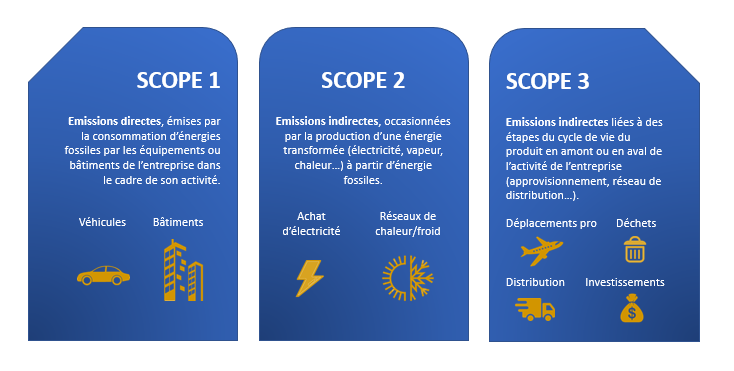
This necessary change in tools stems from an observation: ESG data, particularly those related to the environment, are vast, complex, and difficult to challenge. This poses a real challenge for certain departments, such as logistics, to measure their indirect GHG emissions (Scope III). How, for example, can one measure the impact of thousands of suppliers who themselves are the result of thousands of other suppliers?
During a round table organized in Lucca, a CCH Tagetik client spoke of this feeling of “frustration” that pervades the various ESG stakeholders. “Not having the necessary tools to make the right decisions, not knowing which lever to pull to reduce such an impact.” The challenge, therefore, is to provide the company with a reliable tool capable of helping it build its ESG strategy.
Among the selection criteria for choosing the tool are: the ability to connect to other IS, the volume of data that can be managed, collaborative work functionalities, the possibility of managing different types of reporting (financial and extra-financial), the ability to enter comments and insert supporting documents, or even data security through validation workflows.
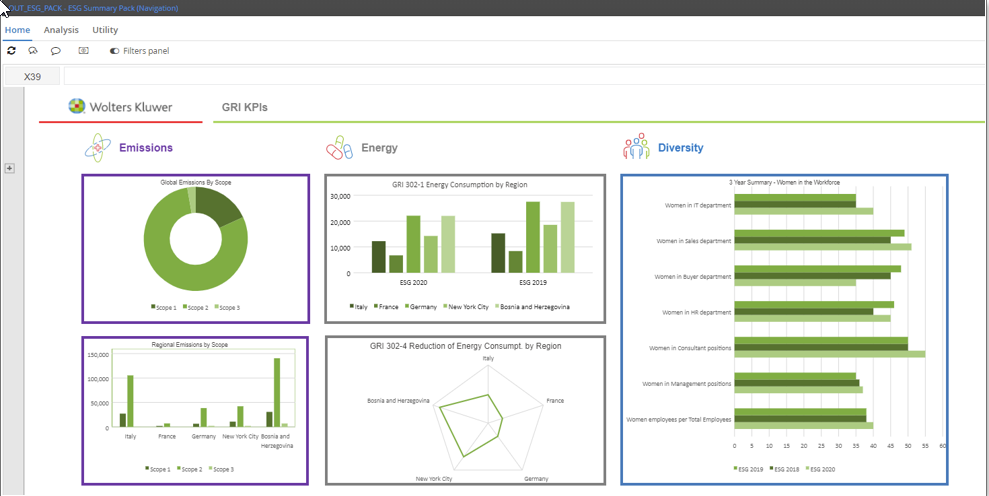
If we now choose to focus specifically on CCH Tagetik, this solution offers the advantage of a 2-in-1 tool for processing both sustainability and financial performance. Indeed, the platform can process both financial and non-financial data and integrate them through a multitude of formats. This flexibility is essential when interconnecting different services such as human resources and procurement, for example. In addition, there is a complete audit trail, a workspace with a flexible data model and architecture (the Analytical Workspace) offering great freedom in data collection and processing, as well as in units of measurement.
Finally, Tagetik also provides “pre-packaged” solutions in which a set of processes and reports are already configured in the application even before the project begins. An asset for quick and easy integration.
IV. Benefits companies can expect
Beyond the regulatory and pragmatic aspects related to implementing an ESG action plan, a company is entitled to question the potential benefits it could derive. In our opinion, there are several:
- Granting of credits: Banking institutions already include commitment requests for borrowers, particularly ESG reporting obligations in credit documentation. Moreover, there are now “ESG Loans,” whose cost is indexed to ESG performance.
- Attractiveness factor: for shareholders seeking sustainable investments, for employees looking for a responsible employer, and also for customers concerned about the impact of the products or services they consume. Very recently, a social controversy related to the working conditions of a Colombian subsidiary caused the share price of “Teleperformance” to drop by 34% in one day.
- Brand image: According to a study conducted by Deloitte (The Deloitte Global Millennial Survey), 63% of millennials believe that a company’s societal benefits should exceed its profit objectives.
In conclusion
While implementing an ESG strategy within a company must be considered globally, across the entire organization, it is essential to be accompanied by experts and to equip oneself with the right tools. It is certain that the company will derive many benefits from a virtuous ESG strategy: in 2020, companies with the best ESG ratings outperformed benchmark indices.
Discover a short video to learn about ESG on CCH Tagetik
If you wish to be supported in implementing an ESG strategy or if you want to know more about how CCH Tagetik handles ESG, you can contact us at jsaccona@meltone.com
Let’s discuss your challenges and our solutions
Let’s talk about your project and discover how MeltOne can turn your challenges into concrete, high-performing solutions.