Vibe coding in the enterprise: the freedom to create, the duty to prove
- AI
- Data & Analytics
AI has been flooding our workstations and inboxes for many years now. AI modules have appeared in our EPM solutions, but they are still complex to use and reserved for specific use cases. At the end of 2025, following the arrival of generative AI, real features accessible to everyone emerged and—good news—have genuine business value! In this article, we will present Pigment’s features, an EPM software publisher, and their impact on the day-to-day work of business users.
We have moved from an AI gadget to a true integrated partner that will do everything to help you speed up analysis and tedious tasks, and shift you towards activating your business levers. Our daily pleasure is certainly to identify sources of business pain, but above all to find relevant solutions and seize opportunities.
That is the whole idea behind these assistants: to speed up laborious tasks so you have more time where you add the most value—especially to assess the situation, solve problems, and look ahead.
In the following paragraphs, we will detail the main AI features made available to financial analysts, management controllers, and other business users by the Pigment platform.
This is GenAI’s entry point in Pigment. Far from being a gadget, it has become a convenience. Every new user will see their onboarding accelerated.
Each time, an assistant will simply guide you to the right screen, explain the steps to follow, and point you to the right documentation.
During a project phase or when a new team member joins, this assistant speeds up adoption—and therefore your ROI.
| Key takeaway: the Navigation and Documentation assistant acts as an interactive guide for finding reports, performing tasks, and activating AI features |
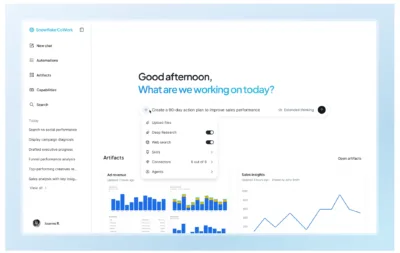
This is the famous “chat with your data” or “conversational analytics” that we see examples of everywhere. Yet it is not so simple to implement. This is where EPMs’ strength lies (compared with bespoke solutions): they provide controlled structures and data, ensuring results are reliable and stable.
And from there, via a chat, anyone can “talk” with the application and get precise insights.
At each step, it offers a visualisation of the figures, with a chart if it makes sense. A concise narrative is also generated to quickly share these results with other people who are less “numbers-driven”.
This type of mature feature is now a convenience. It avoids having to redo or find an existing report showing the data you are looking for. In practice, it appears that most of our one-off questions can be answered by this chat—much faster—shifting from 2 minutes of clicking to 20 seconds of conversation.
| Key takeaway: the Data assistant lets you interact with structured data through a conversational interface, providing fast and simple access to information. |
It is the most impressive agent to date. It can carry out complex tasks autonomously and is emblematic of what awaits us tomorrow in EPM and Finance more broadly: moving business work up the value chain from analysis to action (corrective or improvement).
What happens once you have “refreshed” your figures in your Pigment application? Having this single view so quickly, centralised and with this level of quality is already a huge benefit. But the work is far from finished.
Now you begin the analysis. It can be complex and/or laborious. And only afterwards will you be able to draw conclusions, activate the right levers, contact the right people, and run corrective scenarios to get back on track.
This is where this agent will save you valuable time.
You can explain what type of recurring analysis to run for you and in what format you want the summary.
Example :
The result will follow the format you impose, with a table or chart, and simple summaries that are easy to understand even for non-users of Pigment.
=> Time savings, completeness, sharing a unified analysis, shift to action
You (your entire extended team) therefore arrive in the morning with a precise, detailed, and well-supported focus on the points you need to address as a priority. No misunderstandings, no delays, no missed weak signals. Time for action!
We have defined a methodology for you to identify your first and most important prompts to implement and to empower your teams with this agent.
| Key takeaway: the Analyst agent autonomously performs detailed, recurring tasks and analyses. It embodies the evolution of EPM and Finance roles, shifting value from analysis to corrective or improvement action. |
Time-series-based predictions have existed for more than 20 years. They arrived around EPM 10 years ago and, although highly requested by users, are rarely used.
Why? Uncertainty about how they work exactly, implementation complexity compared with the expected fast and flexible usage, explainability of results, lack of history…
Yet we all dream of quickly building What if? scenarios. Of visualising the trend ahead “if we continue like this.” This is a recurring expectation.
Pigment’s Prediction assistant removes old barriers : it offers a fresh start by eliminating implementation complexity and integration with existing data. In just a few clicks, you can choose the most appropriate algorithm for your context, define the simulation time window, and integrate the result into existing boards (reports in Pigment terms) to share with everyone.
Predictions do not make sense for every context. But with their new ease of implementation, we collectively need to open our minds again and seize this opportunity whenever it arises.
It is our role to support you, motivate you, train you, and guide you.
| Key takeaway: the Prediction assistant addresses a long-standing expectation in EPM: simulating future periods from past data. Despite the existence of algorithms for two decades, adoption remains limited due to their complexity, lack of transparency, and integration difficulty. |
It is the latest addition to the Pigment AI family: the MCP protocol (see definition). It allows LLMs external to Pigment to securely query key application data.
The idea is to enable users who may already have an enterprise chat not to have to go through Pigment to obtain information via chat. There is therefore a drive for flexibility and ease of use. Especially since Pigment controls the response, quality is assured.
Looking further ahead, it also opens the door to smoother communication between all your financial data sources.
We can imagine a single chat that, via the MCP protocols of your Finance applications, will allow you to query and cross-reference data (ERP, detail, and EPM for example).
Here too, do not hesitate to contact us to discuss the potential this opens up within your application landscape.
| Key takeaway: the MCP protocol allows LLMs external to Pigment to securely query key application data. The idea is to enable users who may already have an enterprise chat not to have to go through Pigment to obtain information. |
It is an exciting time. Internally, and in discussions with our clients, we can really feel that these new features go beyond the buzz and are transforming our projects and the way EPM applications are used.
“And how would you use these agents?” To this question, we often hear a pause in the answers or hesitations indicating that we are in new territory. We cannot fall back on what we already know, and we are all helping to write a new page in our projects and processes. It is up to us to invent, with our clients, the best use of these prompts and this new autonomy before very soon integrating the new Pigment modeller and planner agents.
And we reassure you… we have many use cases to share with you.
Large Language Model = an AI algorithm such as ChatGPT or Claude, capable of understanding and generating text in a very natural way.
Model Context Protocol = a protocol that allows LLMs to connect to your tools and data (such as your files, databases, business applications, etc.) or to other LLMs.
A type of AI capable of generating content (text, code, video, instructions, etc.). It is always trained on a history, but is able to produce new coherent content based on it—content that is not necessarily accurate.
Artificial intelligence capable of taking autonomous initiatives. You explain the task to be carried out and the tools it has available, and it will try to carry it out.
Let’s talk about your project and discover how MeltOne can turn your challenges into concrete, high-performing solutions.